Oracle SE2 on Multi-Chip Hardware: Upgrade Now Before Compliant Servers Vanish
Oracle SE2 licensing faces a critical trap with modern multi-chip (MCM) processors. Discover why your next server purchase might invalidate your compliance, and explore the last remaining safe hardware options before the window closes.

Important Disclaimer: Right at the beginning of this article, we must establish a fundamental rule of thumb: understanding and complying with Oracle's licensing rules is always the sole responsibility of the end-user (the customer). It is crucial to emphasize that the information described below reflects solely the author's own professional opinion and personal interpretation of the licensing rules. This interpretation may not completely align with Oracle's official stance or the legal interpretation applied by License Management Services (LMS) during a potential license audit.
Anyone currently looking for a suitable, modern physical server for an Oracle Database 19c Standard Edition 2 (SE2) database will quickly face a serious dilemma. Unfortunately, Oracle does not provide up-to-date, precise guidance or a clear "whitelist" on how the latest processor architectures—which frequently utilize chiplet (multi-chip) technology—should be interpreted from a licensing perspective.
The only concrete facts and official guidelines we can rely on are found in the current "Oracle License Definitions and Rules Booklet" (available here: https://www.oracle.com/contracts/docs/lic_definitions_and_rules_v031526.pdf). In this document, three closely related rules define the boundaries. The combined interpretation of these three rules is what causes the current headache.
First, how does the document define a socket?
"Socket: is defined as a slot that houses a chip (or a multi-chip module) which contains a collection of one or more cores. Regardless of the number of cores, each chip (or multi-chip module) shall count as a single socket. All occupied sockets on which the Oracle Program is installed and/or running must be licensed."
Second, what is the maximum size of a server on which SE2 can be installed?
"Oracle Database Standard Edition 2 may only be licensed on servers that have a maximum capacity of 2 sockets"
And third, the most critical point, the exception regarding multi-chip modules in SE2 licensing:
"When licensing Oracle Programs with Standard Edition 2, Standard Edition One or Standard Edition in the product name (...), a processor is counted equivalent to an occupied socket; however, in the case of multi-chip modules, each chip in the multi-chip module is counted as one occupied socket."
The Great Licensing Paradox: Capacity vs. Occupied Sockets
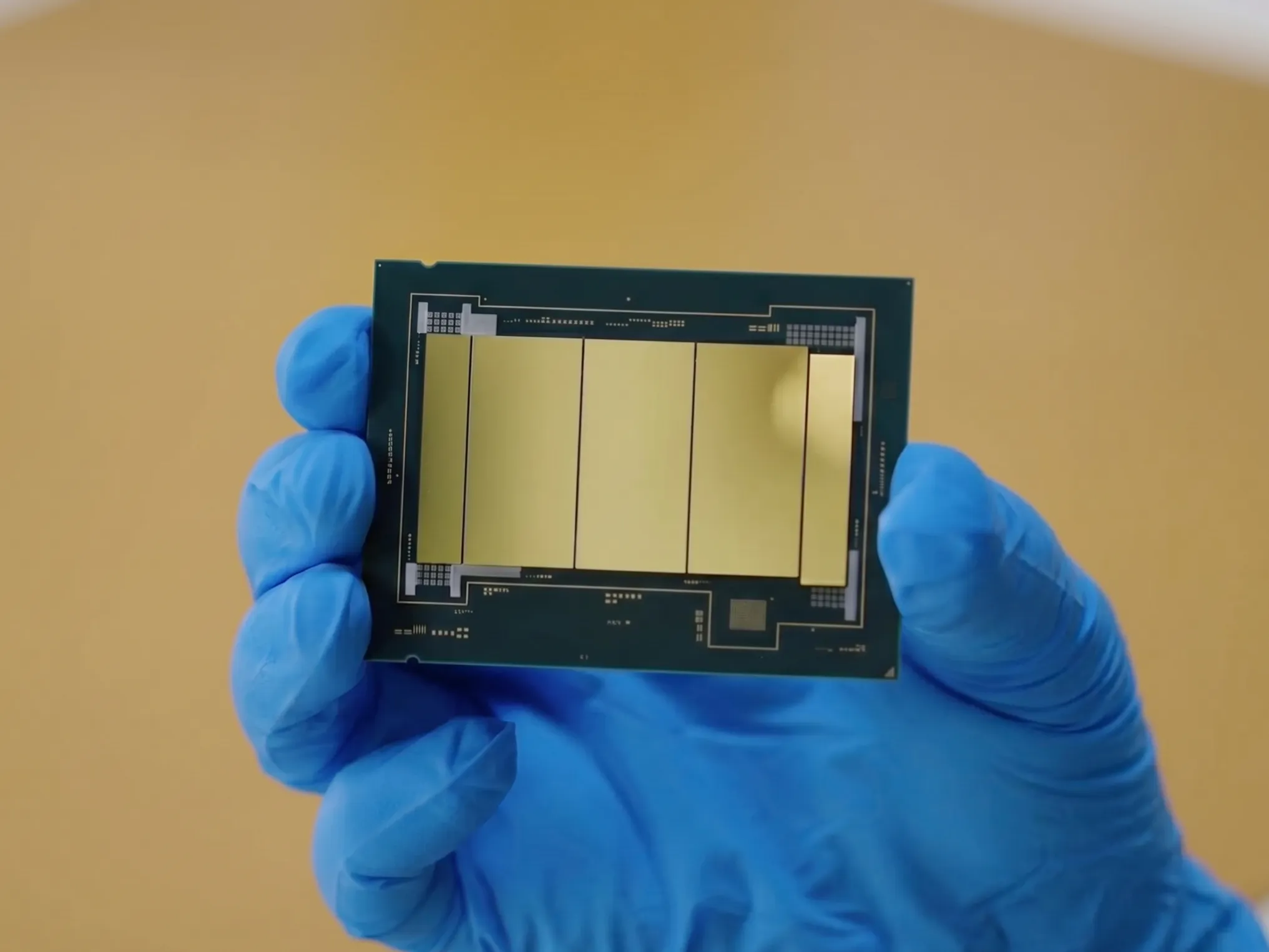
If we read the definitions above carefully, we can spot a massive contradiction—a true legal paradox. According to the Socket definition: "each chip (or multi-chip module) shall count as a single socket". Logically, one might conclude that a multi-chip module (MCM) placed into the motherboard of a physically 1-socket server counts as only 1 socket regarding the "maximum 2-socket capacity" rule, and we would merely have to pay for more licenses based on the number of chips inside it, right?
Unfortunately, the safe interpretation (and the consensus among international licensing experts) says otherwise.
The problem drops like a hammer with the third rule, the SE2-specific exception. There, Oracle states: in the case of an MCM, each individual chip counts as an occupied socket. Let's say we have a 1-socket server containing a modern processor with 4 chiplets. According to the SE2 rule, there are 4 occupied sockets on this server. This is where the auditor's ruthless logic comes in: How could SE2 run on a server that supposedly has a maximum capacity of 2 sockets, if according to our own rules, we just counted 4 occupied sockets on it? If it has 4 occupied sockets, its capacity must be at least 4.
With this logical leap, MCM processors immediately and irrevocably violate the fundamental hardware requirement of SE2: the "maximum 2-socket capacity server". The result? Using Standard Edition 2 on that machine becomes non-compliant. Because of this paradox, anyone who wants to sleep peacefully and avoid astronomical fines during a potential audit must consider only true, physical "single-chip" processors for SE2.
The I/O Chiplet Trap
The situation is further aggravated by another characteristic of modern chiplet-based manufacturing technologies. The latest processors now include separate I/O (Input/Output) chiplets alongside the compute cores, often multiple ones within a single package. And here is the bitter pill: Oracle's definition makes no distinction based on the function of the dies!
The licensing policy does not talk exclusively about "compute" chips; it speaks generally about any "chip." Thus, under the strictest interpretation (which is the most likely during an audit), these I/O chiplets each count as a separate socket for SE2 licensing, further inflating the number of "fictitious" sockets within a single physical processor.
The question rightfully arises: given these trends, will there come a time in the near future when we won't be able to choose a physical server for this edition at all?
In this blog post, we seek answers to this unsettling question. We will examine the current state of affairs, the remaining options on the modern processor market (searching for the "holy grail," the purely single-chip solutions), and attempt to outline what the future holds for Standard Edition users.
The AMD EPYC Situation: Where Chiplets Have Long Been the Standard
Let's begin our market overview with AMD. Their story is relatively short but highly instructive. AMD was the first manufacturer to transition massively to the chiplet (MCM) architecture in the server market with their EPYC processor family. Thanks to this, they achieved massive core counts, but from an Oracle SE2 licensing perspective, they practically priced themselves out of the viable options.
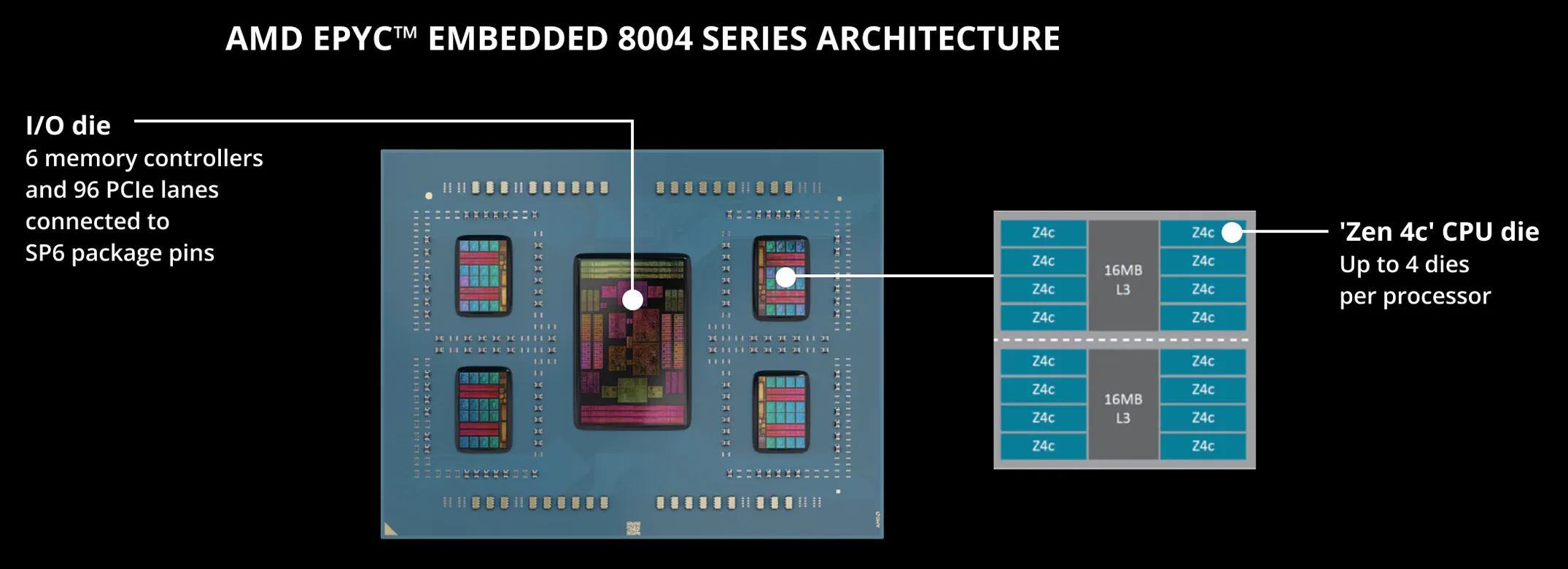
Important fact: not a single modern AMD EPYC processor has a "single-chip" (monolithic) design. Without exception, they all contain multiple chiplets. If you want to check exactly how many chiplets a specific EPYC processor is built from, the English Wikipedia serves as an excellent and up-to-date resource: https://en.wikipedia.org/wiki/Epyc.
Is the Situation Completely Hopeless?
Although we have to give up on single-chip processors in AMD's case, there is an interesting "loophole" that might still offer a viable solution in their smallest, entry-level processor categories.
Take, for example, the 4124P, 4244P, 4344P, 4364P, 8024P, 8024PN models from the 4th generation EPYC (Zen 4) lineup, or the 4245P, 4345P models from the 5th generation (Zen 5). The architecture of these processors shares a common trait: they contain exactly 1 compute (CCD) and 1 I/O (IOD) chiplet. That is a total of 2 chiplets.
What happens if we choose one of these processors? If we put this 2-chiplet processor into a server whose motherboard has strictly 1 physical processor socket (1-socket), the licensing math suddenly turns in our favor. According to Oracle's rule, due to the 2 chiplets inside the processor, there are 2 "occupied sockets" on this server. Since the server can physically only handle this much (as it only has 1 physical socket, which we filled with this 1 CPU), the server's "maximum capacity" remains exactly 2 sockets. Thus, narrowly but entirely legally, we comply with the "maximum 2 sockets" limit!
Is It Worth It for Us?
While this configuration is compliant from a licensing perspective, we must ask: does it make business sense?
If licensing by Processor (CPU): This is the most painful scenario. Since Oracle considers us to have 2 occupied sockets, we must purchase 2 SE2 Processor licenses for our single physical processor. Given that these AMD CPUs have relatively low core counts (4-8 cores), the performance-to-license-cost ratio will be highly unfavorable.
If licensing by Named User Plus (NUP): Here the tables turn! If the number of database users is low and NUP licensing is cost-effective, then this entry-level AMD MCM architecture can be a perfect choice. We cost-effectively acquire highly modern, fast technology without violating Oracle's strict hardware rules.
The Intel Labyrinth: Finding the Monolithic Needle in the Haystack
Over at Intel, the situation is significantly more complicated. The biggest problem is the lack of information. You simply cannot find clear information on Intel's official product specification pages (ARK)—or often even on Wikipedia—about how many physical chiplets a specific Xeon processor model contains. Intel apparently does not feel it necessary to communicate this information, which fundamentally complicates our task, since Intel has also been manufacturing multi-chip (MCM) processors for quite some time.
Perhaps the only official source that can be mentioned is the following Intel support page: https://www.intel.com/content/www/us/en/support/articles/000099181/processors/intel-xeon-processors.html. On this page, 4th generation (Sapphire Rapids) Xeons are already referred to as multi-chip modules. We should quickly add, though: there are still a good number of monolithic models in the 4th generation https://en.wikipedia.org/wiki/Sapphire_Rapids#Die_configurations , but since we are focusing on the future and the most current hardware, we won't cover them now. Let's focus on the cutting-edge 5th and 6th generations!
The 6th Generation (Sierra Forest and Granite Rapids): The End of the Line?
Let's start right away with the most advanced, high-end 6th generation Xeons ("Sierra Forest" and "Granite Rapids"). You can find deeper details about these architectures here: Sierra Forest Wikipedia and Granite Rapids Wikipedia.
And here comes the cold shower: NONE of these modern flagship processors comply with SE2 licenses!
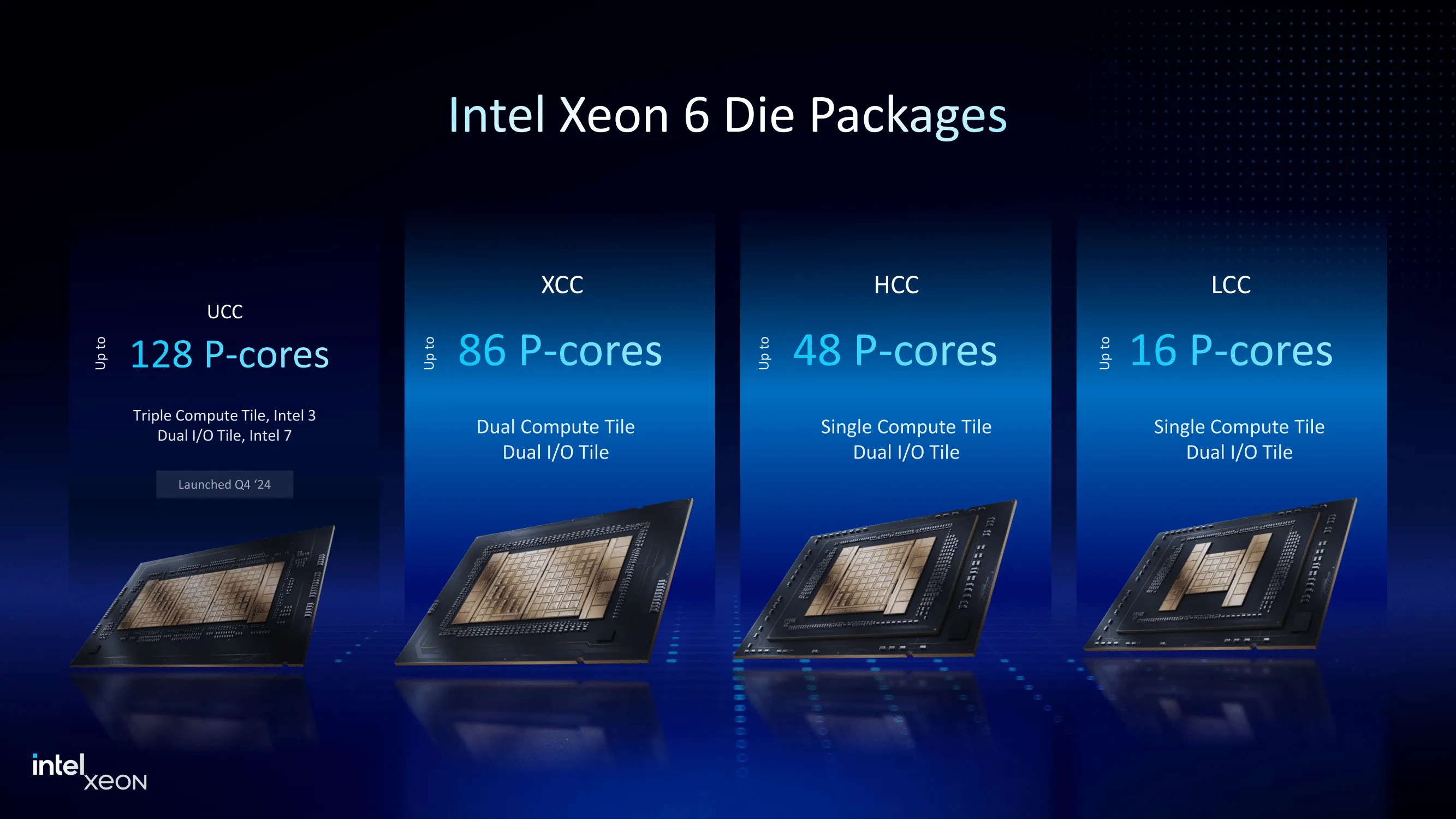
Why? Because due to their architecture, they all contain at least 1 compute chiplet and 2 separate I/O chiplets. That is already 3 chips in a single socket. Based on the previously presented Oracle definition, this qualifies as 3 "occupied sockets" even in a 1-socket server, which immediately and irreparably breaches the SE2 "maximum 2 socket capacity server" rule.
This is the point where many IT professionals might truly feel that they have been forced into a corner with their Oracle Standard Edition 2 license in the world of modern hardware.
Fortunately, the situation is not entirely hopeless. There are two perfectly viable, safe "escape routes" in the current market.
Escape Route 1: 5th Generation (Emerald Rapids) Processors
As long as 5th generation Xeons are available on the market, they offer an excellent alternative because Intel had not yet implemented separate I/O chiplets in these models. However, you still need to be alert here!
The rule is as follows: among the 5th generation models, the LCC (Low Core Count) and MCC (Medium Core Count) types still contain a single, monolithic chip. These comply perfectly and count as 1 socket. On the other hand, the XCC (Extreme Core Count) types are built from multiple chips, making them blacklisted for SE2!
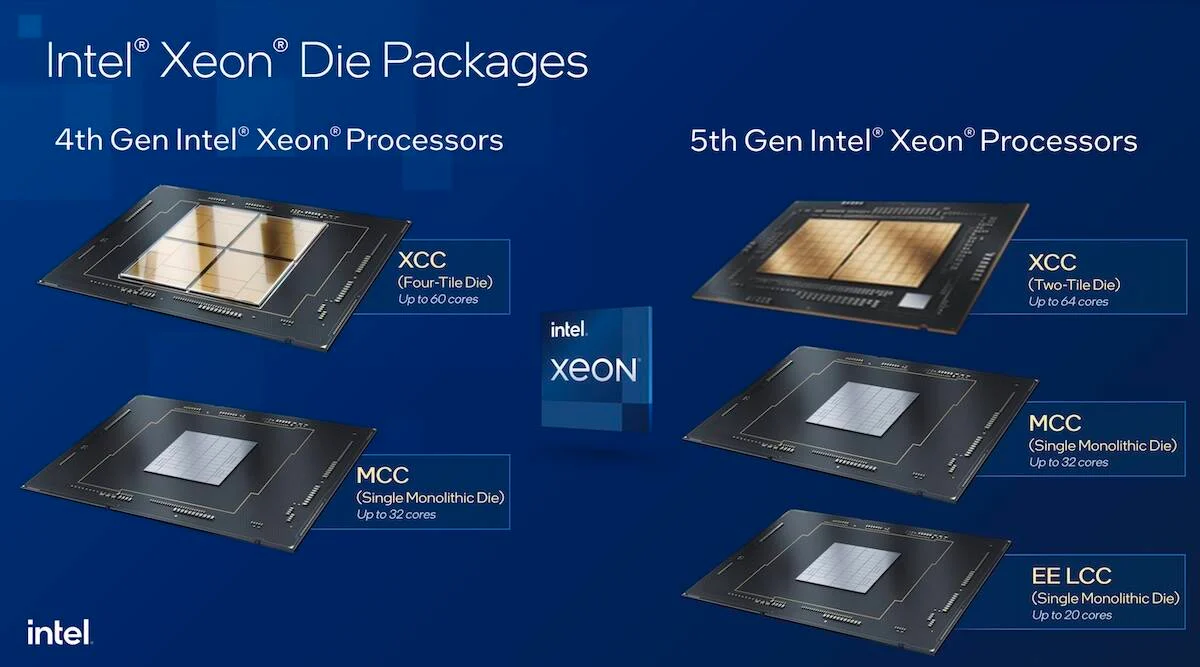
But where can we find out whether a processor is LCC, MCC, or XCC, if Intel's website remains silent about it? Luckily, the documentation of major server manufacturers comes to the rescue. HPE, for example, itemizes this information in the official specifications (QuickSpecs) of their servers. In the document https://www.hpe.com/psnow/doc/a50004307enw, you can easily look up the die design used by specific processors. Using this "trick," we can find highly powerful, multi-core (up to 32 cores) processors that are still considered "single-chip," meaning 1 socket in Oracle's eyes.
Escape Route 2: The Entry-Level Xeon 6300 (Raptor Lake) Series
If you absolutely crave the latest 6th generation technology, the solution can be found in the entry-level server market: this is the Intel Xeon 6300 (e.g., 6300P) series.
These processors are built on the "Raptor Lake" architecture, whose biggest advantage in this context is that its design is exclusively monolithic (single-die). Furthermore, these processors were designed by the manufacturer to be installed solely in servers with exactly 1 processor socket.
One monolithic chip in a maximum 1-socket server: this configuration is unassailably compliant with the strict rules of Standard Edition 2 from every perspective. You can browse the exact list of processors belonging to this category here: https://en.wikipedia.org/wiki/Raptor_Lake#Server_processors.
The Directions Dictated by Oracle: Targeted Herding Toward Appliance and Cloud
If we take a step back and look at this entire hardware and licensing chaos, a bigger picture quickly emerges. Let's have no illusions: Oracle is fully aware of the changes in the processor market. Maintaining these strict rules is no accident; they are very firmly trying to guide (or let's be honest: force) Standard Edition users into two specific directions.
Direction 1: The Oracle Database Appliance (ODA) "Loophole"
Oracle's first official answer to the question "what should I run my Standard Edition database on?" is their own engineered system, the Oracle Database Appliance (ODA).
The irony of fate is that inside current ODA servers, multi-chip AMD EPYC processors are roaring. How is this possible if we just detailed earlier that SE2 prohibits this capacity?
The answer is simple: Oracle created a special licensing loophole that applies exclusively to ODA servers. The licensing policy allows the SE2 database (whether it's 19c or the latest 26ai) to run on multi-chip CPUs on ODA machines.
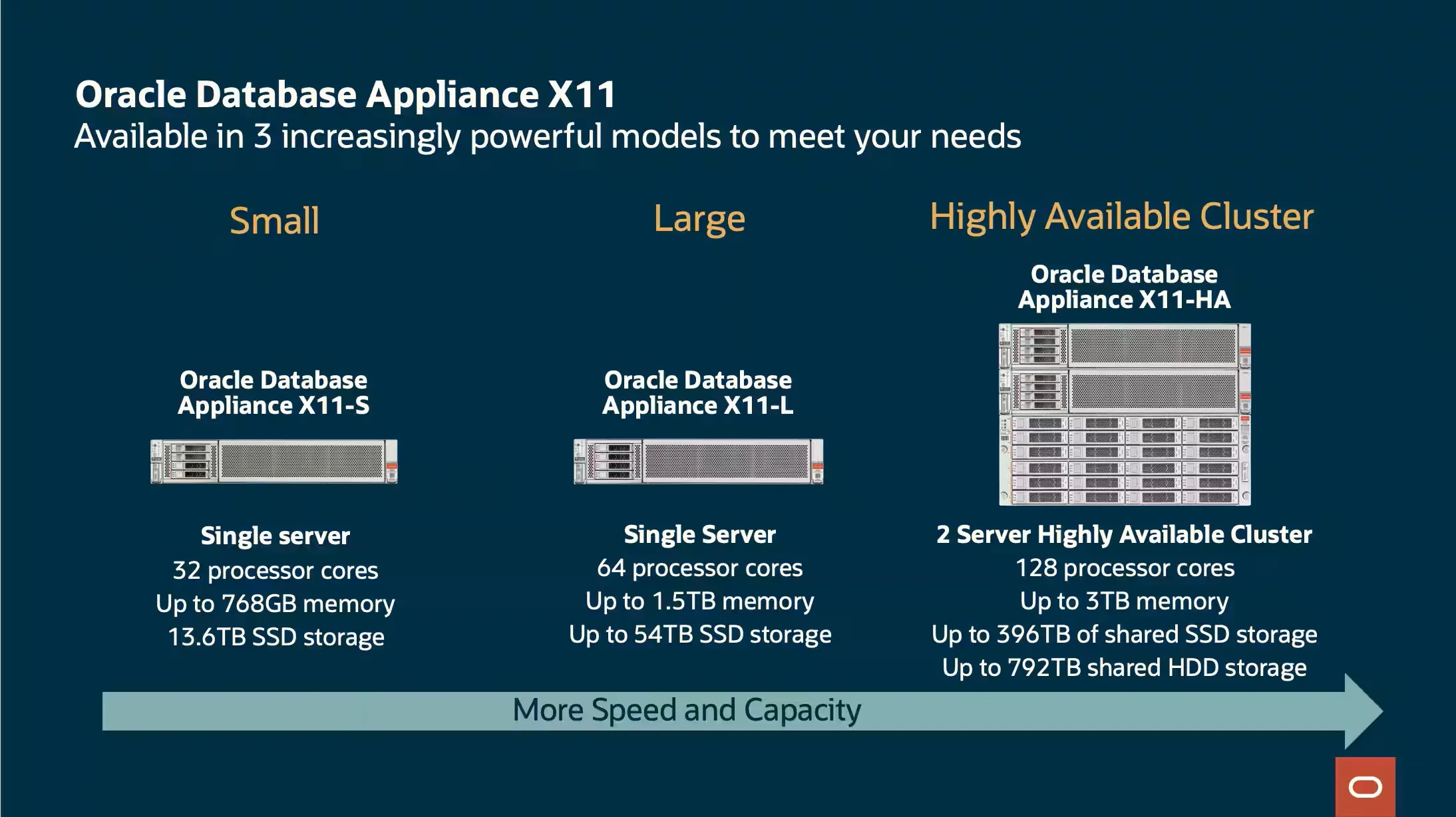
But this comes at a price, namely a built-in "penalty multiplier" in Processor licensing: for ODA, when using Processor-based licensing, you must have 1 SE2 Processor license for every 8 processor cores. So, if you buy a 32-core ODA server, you immediately have to put 4 SE2 Processor licenses on it. Fortunately, the ODA platform officially supports capacity management (hard partitioning/Capacity on Demand). Thanks to this, we can restrict the database via software to, say, 16 cores (so we only need to buy 2 licenses), and allocate the remaining freed-up resources in the machine for other, non-database services and applications. (If licensing by NUP, the minimum 10 NUP / physical server rule still applies here. The official licensing guide can be accessed here: Oracle Database Appliance Licensing Overview).
What's the catch with ODA? Mostly the price tag and the pressure of a technological shift. The list price of the smallest, entry-level ODA server (the X11-S), even without support, starts over $24,000 USD. This amount goes well beyond the procurement budget an average SE2 customer allocates for 1 physical server. Moreover, many companies simply do not want to introduce a completely new, engineered technology and management ecosystem into their already established hardware and operating system platforms.
Direction 2: To the Oracle Cloud!
The other direction—pushed perhaps even more aggressively than ODA—is the cloud. Reading between the lines, Oracle's message is becoming increasingly clear: don't bother with your own hardware, don't fuss over counting chiplets on processors, and don't fight the phantom of audits. Move your entire database infrastructure to the Oracle Cloud Infrastructure (OCI), where you can use your database as a dedicated PaaS (Platform as a Service) with clean and transparent OCPU-based billing (though it often comes with different types of constraints).
Conclusion: Where to Next, Standard Edition?
I have been working with Oracle database technologies for over 25 years, and during this time, I have always stood by them with full commitment, especially when providing technological support to small and medium-sized enterprises (the SME sector). If I had to summarize everything written so far, I am left with mixed feelings.
For those who have already heavily invested in Oracle technologies and SE2 licenses, there are still—as we've seen above—on-premise, self-hosted solutions available. But let's not kid ourselves: the trajectory is crystal clear, and the writing is on the wall. We are getting very close to a period where the Oracle Database Appliance will practically be the only hardware device with serious compute capacity that we can deploy on-premise ourselves. In the independent server market, monolithic processors are slowly being pushed entirely to the lowest, entry-level tier, or—at this stage of technological evolution—they will disappear altogether.
Can we expect any leniency from Oracle regarding licensing terms? Knowing the manufacturer's history and business policy: Oracle has never been known to relax usage and licensing rules, so I wouldn't count on that in the future either.
That leaves the other official path, the Oracle Cloud. However, this step only truly becomes an efficient and profitable choice if the customer is willing and able to migrate their entire surrounding architecture (application servers, backend systems) that relies on the database to the cloud as well.
This brings us to the endpoint of a process I have sadly been observing among my own clients for years. Many made the difficult decision back in 2015 when the old SE and SE One licenses were phased out (and the more restricted SE2 was introduced). For others, the sudden, drastic leap in licensing costs caused by server virtualization licensing tightening (e.g., audit issues with VMware environments) was the last straw. And I am certain that the next wave of migrations will come from companies that, in the near future, face the reality that they simply cannot purchase a sufficiently powerful, modern, yet licensing-compliant server from their usual hardware vendor (HPE, Dell, Lenovo) for their existing database.
We are already seeing the final result of this process in the market: many have already transitioned, or are currently migrating, to PostgreSQL (or other open-source) foundations. And while my heart as a professional still beats for Oracle—since technologically, in terms of robustness and features, I still consider it one of the best, if not the best database engine today—on a human and business level, I completely understand the CEOs and IT decision-makers who, exhausted by this licensing and hardware obstacle course, ultimately decide to leave the platform.
Need Help Navigating This Maze?
If you feel uncertain about your current or planned Oracle SE2 architecture, or if you are looking for the right compliant hardware before the window closes, you don't have to tackle this alone. Please check out our Services page to explore how we can support your business, or feel free to reach out to me directly via the Contact page. We are here to help you make the best strategic decisions for your IT infrastructure.


Explore Topics

Newsletter
Never Miss a Crucial Update
Get the latest Oracle and PostgreSQL scripts, security alerts, and DBAInspect news directly to your inbox.
Spotlight
- Our Featured Tool-
Safely audit your Oracle and PostgreSQL environments with our strictly read-only health check tool.